Of Words and Challenges

Photo by Jesse Orrico on Unsplash

Based on an actual conversation at breakfast, between two people, whom I will call Sally and Jim:

Sally:  I got the word today on just 3 tries.

Jim:  That’s great.  What was the word?

Sally:  Shout.

Jim:  But that had none of your usual start letters.

Sally:  And that was helpful.  You learn a lot about the structure of words through this exercise, interesting things, especially about five-letter words.

Jim:  That could make for a good educational tool, beginning with middle-school kids.

Sally:  If you could get the kids actually to do it.  They might find it too challenging these days.

Jim:  Good point.  Too many are quick to avoid challenge, and too many others quick to accommodate the evasion of challenge.

Sally:  And unhurried to reward those who are willing to take on a challenge.

Jim:  Education is supposed to be about challenge.  Engaging challenge is a great way to learn.  If you don’t, the more you evade challenge, the more challenges you will have.

Sally:  There are challenges we can avoid, and should avoid.  But life is challenging.  It’s supposed to be.  Challenges will come, looked for or not.

Jim:  Yep.  You can avoid some, but not all.  The learning is in how to manage challenge, how to face it, and how to overcome it, if you can, and how to cope if you can’t.

Sally:  Some of the biggest challenges come from those who are selling to people, especially young people, that they can avoid all challenge.

Jim:  Who promise ‘challenge-free’ paths of life.  They offer making this ‘The land of the safe, and the home of the careful.’

Sally:  Where is the joy in that?  The better path, the path of fulfillment, is in ‘The land of the free, and the home of the brave.’  Not only do we overcome challenges. . .

Jim:  . . . and help each other face them . . .

Sally:  We grow, and many things that once seemed challenges no longer are.  Then we can take on bigger and better things, becoming stronger, more able, more fulfilled by accomplishment.  All the while, more compassionate, kinder, more charitable.  That is why God sent us here.

Jim:  It’s in the scriptures, “there is an opposition in all things.”  We discover the joy in life, find and live a joyful life.  Not an easy life.

Sally:  “Having no life,” without the challenge of opposition, as the scriptures teach.  But very loud, persistent voices promise challenge-free, problem-free, easy lifestyles.

Jim:  They promise.  The challenges come as the promises are not kept, not delivered as advertised.

Sally:  And then the challenges multiply—and accumulate, and hang around.

Jim:  To be faced by a weakened people, in ‘The land of the safe, and the home of the careful.’

Sally:  A life of constant challenge but few achievements.  And plenty of frustration.”

Jim:  Again, where is the joy in that life?  A life missed.

Sally:  Where has that ever worked?  Nowhere.

Jim:  In the end, not even for those who promised it.  Life gone amiss.

Sally:  That might be tomorrow’s word.
Of Burgers-Fries and Excellence

Photo by Peter Dawn on Unsplash

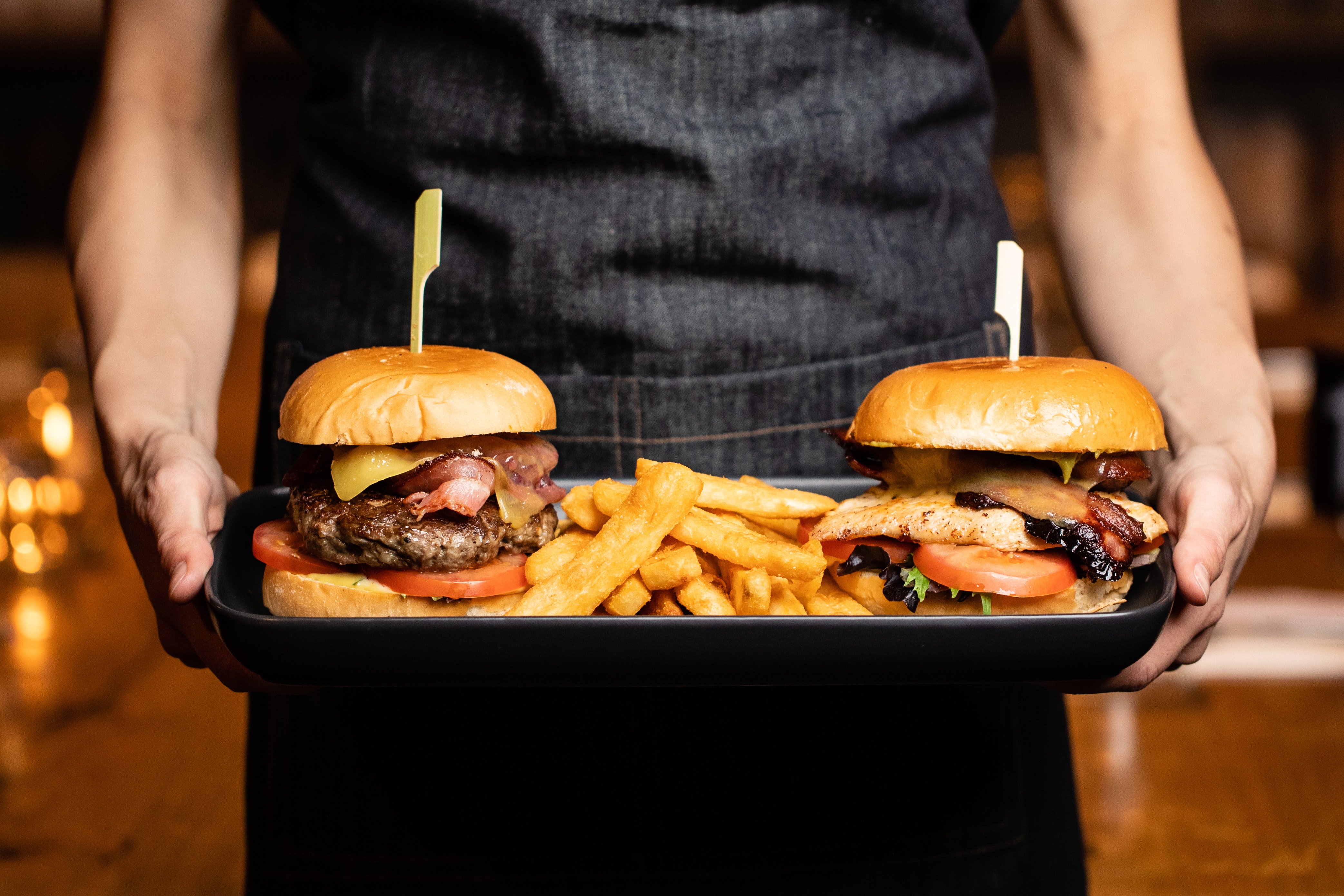
My favorite local hamburger joint is the simply named “Burger Shack.”  The hamburgers are good, made to order, with an option for a gluten-free bun; prices are decent.  Where this joint completely outshines the crowded competition is that the fries are far and away the best around.

One might think that with a commonplace menu centered on burgers, fries, and milkshakes the fare could easily become mediocre.  There is plenty of that available in the surrounding culinary community.  The national mass-production chains cater to the market for mediocre.  They had occupied the so-so field for so long that it appeared that all the burger rivalry was solely among the giant mediocrities, working hard to find new ways to repackage and remarket the same thing, becoming more alike in their efforts to appear different.

Who knew that people—lots of people—could be attracted to excellence in burgers and fries?  A few daring souls made a go at the chance that there may be customer demand for more than mediocre.  The market allowed it and rewarded it.  Competition to rise above mediocre has become fierce, with customers benefitting from the choices offered.    

Not that I would forbid mediocrity.  Mediocrity is O.K., as far as it goes, but only O.K.  I am happy that there can be more.

Enjoying better burgers, pleased with better shoes, and glad for better dentists, I find the insistence on mediocrity and the outcry against excellence astonishing.  How frequently we encounter voices decrying competition, seeking to standardize everything by treating everything and everyone the same!  Is that what people really want?  We used to have a shelf full of trophies “won” by our children just for showing up.  We failed to convince the kids to take them to their own homes for display.

More astonishing is the assertion that celebration of mediocrity and condemnation of competition promote diversity.  The theory is that diversity cannot compete in a system that rewards excellence.  What is the alternative prescription for diversity from these levelers?  They demand removal of standards that applaud excellence in achievement or that recognize merit in performance.

Reality reveals opposite results.  This leveler ethic promotes either or both of two outcomes.  First, things tend toward the same as differences are discouraged; efforts that improve performance are placed at risk of suppression.  Second—alternatively or concomitantly—the levelers who rise above to be in charge of administering this doctrine decide recognition and advancement, and they do so based on whatever standard suits their fancy or is then in vogue.  Such standards tend to be unmeasurable, subject to whim, suiting the arbitrary caprice of the chief levelers.

In short, diversity is always in danger in the tyranny of mediocrity.  No one must be more beautiful, according to the day’s definition of beauty.

For a time the big burger chains, which initially arose by offering a better, excellent idea (until the idea became standardized) put the local mom and pop joints out of business.  Markets, though, have allowed competition to work its magic, tolerating room for some intrepid innovators to test customer interest in burger excellence.  Some succeed.

There comes the levelers’ claim that competition is inhuman, or at least unkind.  It supposedly disadvantages those who are not excellent, who are only mediocre.  Since not everyone can excel, this competition must be stopped.

That claim is inhuman and unkind.  People everywhere are mediocre or less than mediocre at some things, but each can do something better than someone else can.  The variety of talents and gifts is constantly amazing (and sometimes amusing).

If mediocrity standards are imposed, however will we discern the excellence that each has to offer?  Each person may be stymied from discovering what he or she is best at doing.  How does one find the divinity in his or her humanity, embedded in the unique gifts from God awaiting to be developed?  How many advances will be lost? We will be poorer for the loss.

I do not know how long it took the owners of Burger Shack to find out that they could offer an excellent product.  Perhaps they are still finding out.  While the year’s virus restrictions play to the advantages of the big, national firms, the last time I was at Burger Shack it was booming, even under the restrictions.  If allowed, people find a way.